Many teams do not struggle because they lack software. They struggle because every process begins by reconstructing context: the task lives in one tool, the file in another and the deadline somewhere else. Gestionate approaches the problem differently by keeping workspaces, records and operational follow-up close enough that the team can move forward without translating work from one system to another.
A workspace that does not restart every morning
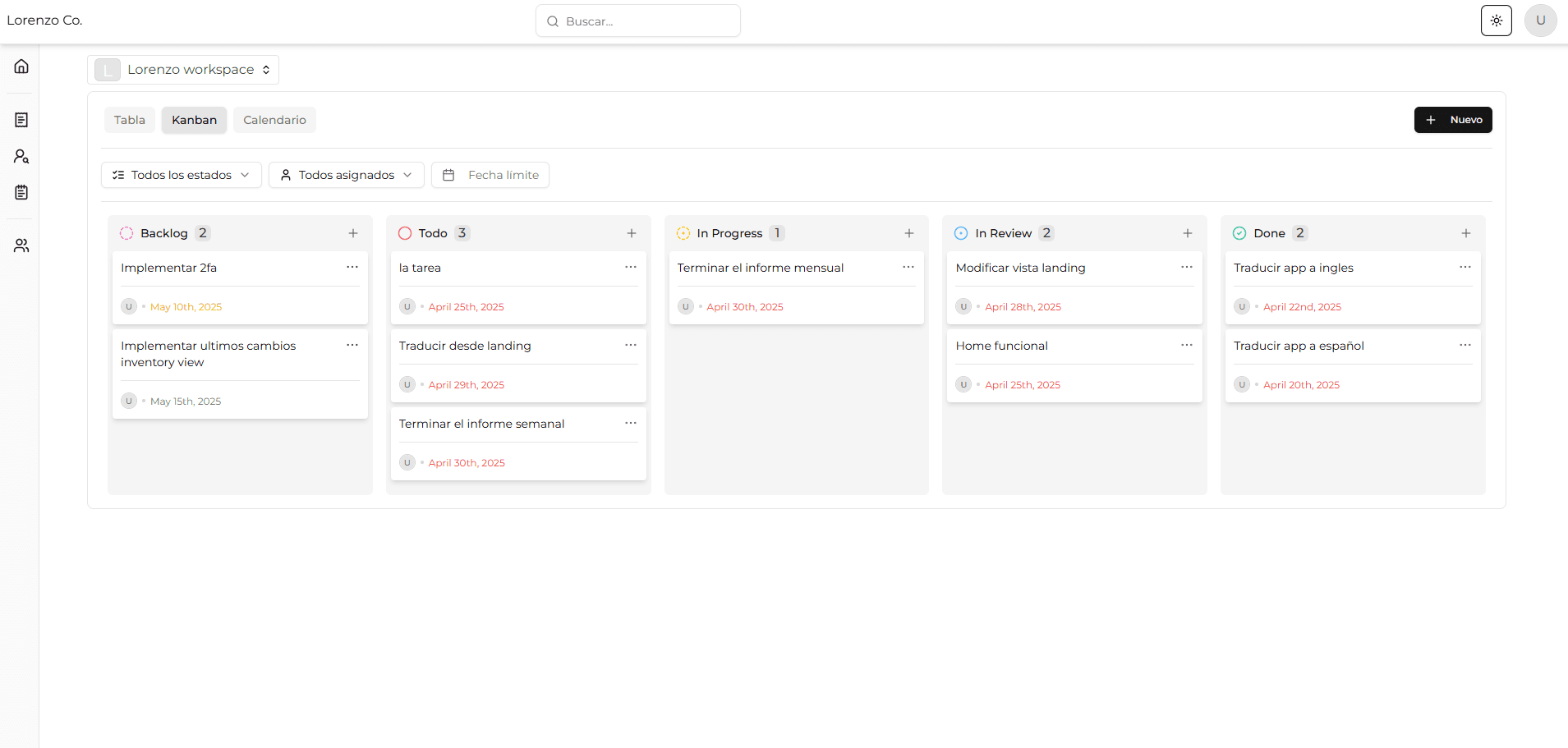
Gestionate's workspace model keeps execution simple: tasks have status, due dates, priority and assignees, while the team switches between table, Kanban and calendar according to the review they need. The task does not change when the view changes, which means follow-up is lighter and the workspace itself becomes the place where work is reviewed.
Records and supporting information stay close to the work
Operations rarely slow down because nobody knows the task name; they slow down because files, notes and structured information are scattered. Keeping records and supporting context accessible inside the same environment shortens handoffs, reduces repeated questions and makes onboarding easier for anyone joining the process.
Shared context helps other areas move faster too
When workspaces, records, billing and sales sit on the same organizational layer, each area can understand what the others are doing without rebuilding the story from scratch. That is the practical value of an all-in-one platform: not everything in one screen, but one coherent operating context.
Key ideas to keep
Changing views is useful only when the underlying task data stays consistent.
Documentation supports execution best when it stays close to the team that uses it.
Operational clarity comes from shared context, not from adding more reporting layers.