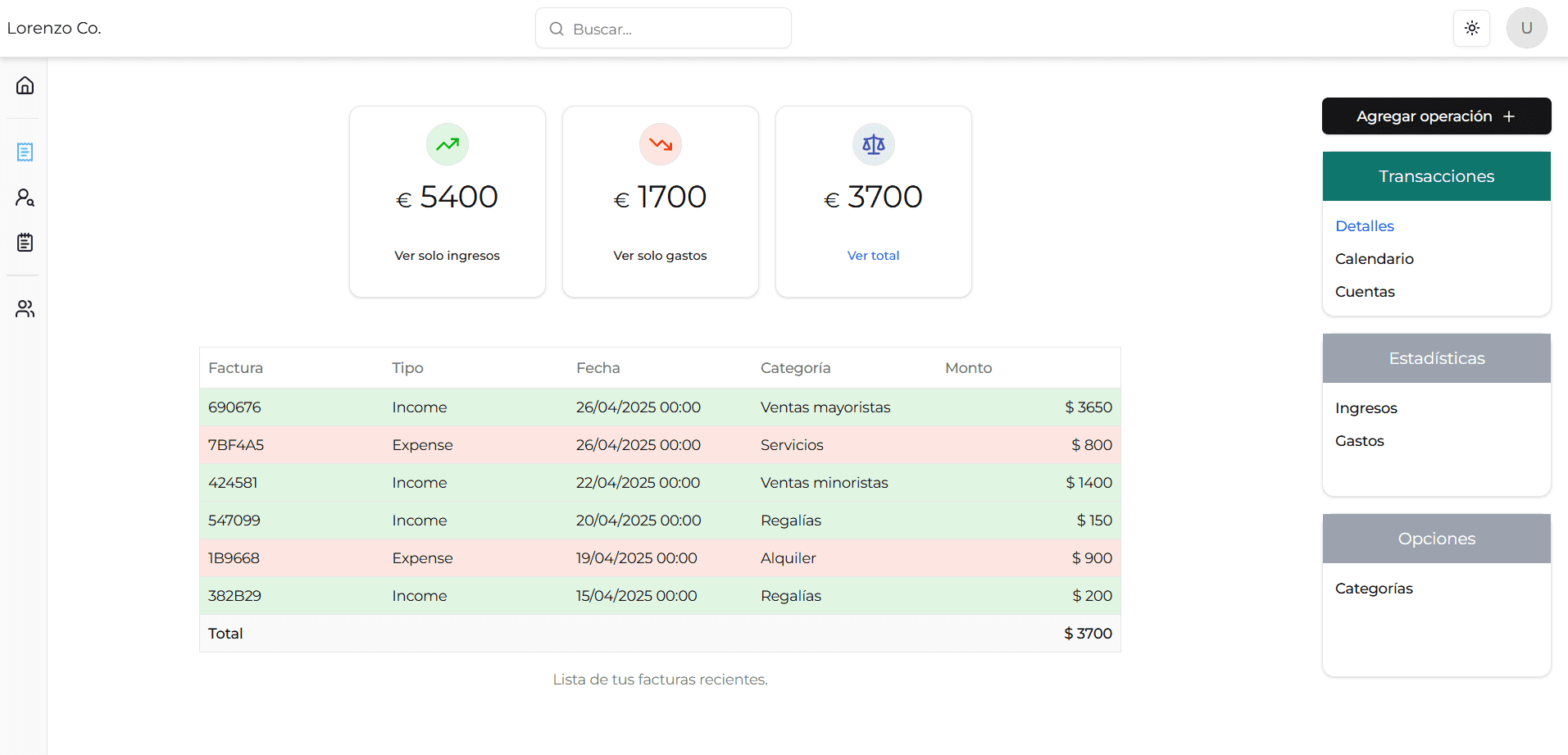
Finance work gets messy when each question requires exporting data, updating a spreadsheet and then explaining the result somewhere else. Gestionate's billing area is more useful when it is treated as an operational surface: movements, calendars, categories and dashboards all help the team read the same reality with less manual reconciliation.
Operations first, bookkeeping second
The value of the billing area is not limited to storing movements. Detail views, calendar views and configurable dashboards make it easier to follow what happened, when it happened and how it changes over time, which helps teams read operations instead of merely logging transactions.
Structure matters more than volume
Independent accounts, currencies, categories and payroll-related data such as worked hours, deductions and benefits give the finance layer the structure it needs. A cleaner model reduces noise, makes follow-up more reliable and helps the organization grow without turning every monthly close into manual cleanup.
Reporting becomes part of decision-making
When charts, trends and automated reports start from current data, reporting stops being a separate ritual. Teams can review income and expense behavior, detect pressure points and use suggestions or action plans as part of normal operational planning, not only at the end of the month.
What to keep in mind
A finance view is stronger when it explains operations, not just movements.
Good categories and account structure save more time than last-minute cleanup.
Reporting is most useful when it stays connected to live working data.